
Drain Cleaning in Brossard: South Shore Condos and Houses
How drains clog in Brossard condos and houses on the South Shore, and what to do about it.
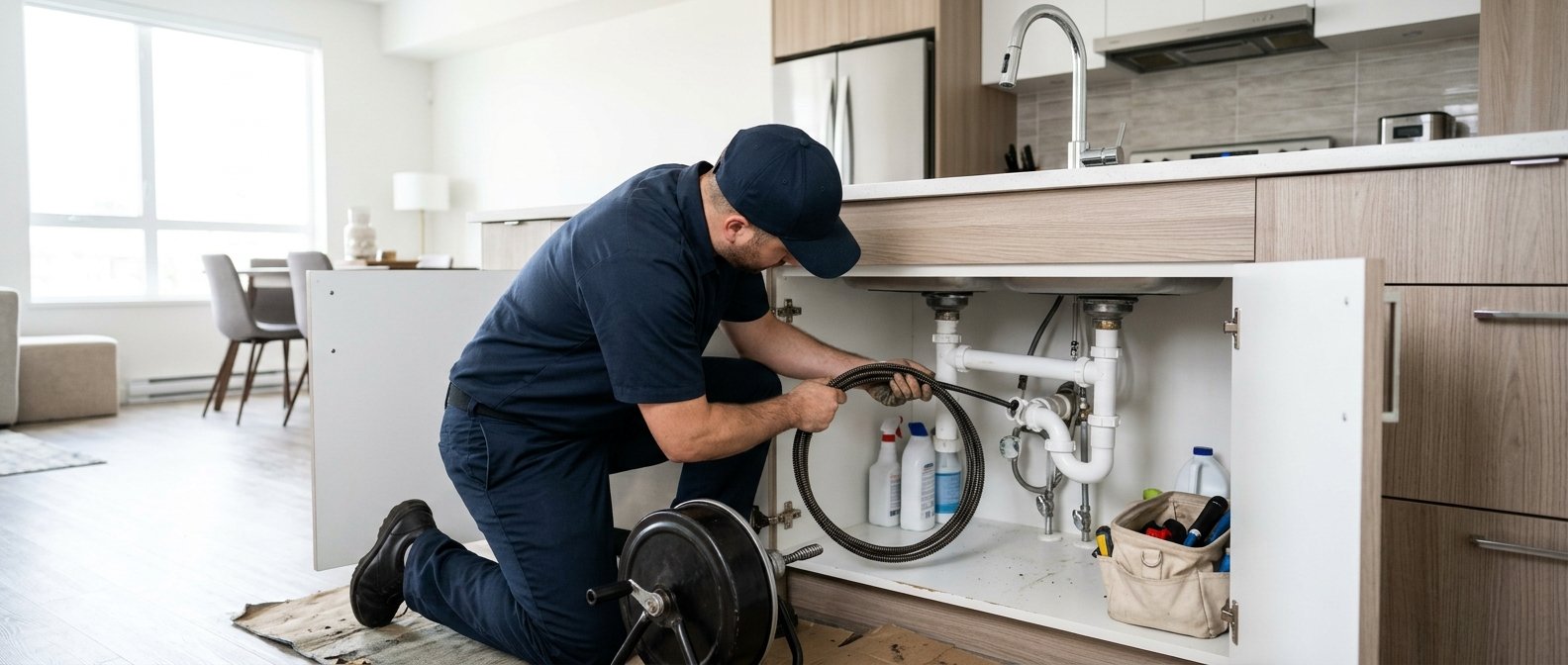
Drain cleaning in Brossard: condos, houses and the South Shore
Brossard is on the South Shore, across the river from Montreal, and it offers a mix of housing: detached houses and townhouses on residential streets, and condo buildings of various sizes. If you are looking for drain cleaning in Brossard, the first question is often not how to fix the clog but who is responsible for it. A condo owner and a house owner face different situations, even when the symptom, a slow or backed up drain, looks identical.
This guide covers the typical causes of clogged drains in Brossard homes, the particular questions condo owners should ask, what to do about basements and floor drains, and when to call a professional. It is general advice grounded in how plumbing works. Your building and your pipes are your own, and a camera will tell you more than any article can.
Condo owners: whose drain is it?
In a condo, your kitchen sink, shower and toilet connect to branch lines inside your unit. Those branch lines then join a shared stack that serves several units and finally leave the building through a common line. A clog can sit in any of those places, and where it sits often decides who handles it.
A quick way to narrow it down is to look at the pattern. If only one fixture in your unit is slow, the problem is probably local and in your own branch. If several fixtures in your unit are affected, or if neighbours report the same thing, the shared stack or the main line is more likely. Water that appears in a shower or a floor drain when someone else in the building runs a washing machine points the same way.
Before you hire anyone, check your declaration of co-ownership or ask the syndicate about the rules. Responsibility for drain lines often depends on which section is private and which is common, and rules differ between buildings. If the blockage is in your own branch, you can call a drain service directly. If it looks like a shared stack, tell the property manager or the syndicate right away, because delays can affect neighbours below you.
Whichever case applies, give clear information when you call. Say which fixtures are affected, what floor you are on, when it started and whether it is getting worse. Good details speed up diagnosis, whether you are speaking to the syndicate or to a technician.
Common causes in condos
Condo drains clog for the same reasons as drains anywhere: grease, hair, soap, paper and things that should never have been flushed. The difference is scale. In a building with many units, small habits add up in the shared stack. A little grease from each kitchen becomes a coating. A few wipes per week become a plug. That is why building wide reminders about what goes down the drain are worthwhile.
Another condo specific issue is access. You may not have a cleanout inside your unit, and the ground floor or basement level may be the only place to reach the main line. That can limit how a blockage is cleared, which is another reason a camera inspection helps before work starts.

Houses in Brossard: roots, grease and basements
If you own a house or a townhouse, you are responsible for the line from your fixtures out to the connection with the municipal system. Many residential streets in the area have mature trees, and roots can enter small cracks or joints in an underground line, much as they do elsewhere in the region. See our Laval guide for more on roots. Inside the house, grease in the kitchen line and hair in the bathroom are the usual culprits.
The basement deserves particular attention. A floor drain is often the lowest point in the plumbing, and it shows a downstream problem before other fixtures do. If you see water rising, smell something unpleasant or hear gurgling, do not ignore it. Avoid pouring chemical cleaners into a drain that is backing up. They rarely clear a deep blockage and can create a hazard for the person who comes to fix it.
Winter on the South Shore
Winters here are cold, and that affects drains in quiet ways. Cold incoming water makes cooking fat set faster inside pipes. Freezing ground can stress buried lines, and spring melt adds water to the soil and the system. A drain that behaved fine in autumn may start to slow in late winter, and a basement floor drain may begin to gurgle during a thaw. These are good times to pay attention to early warning signs.
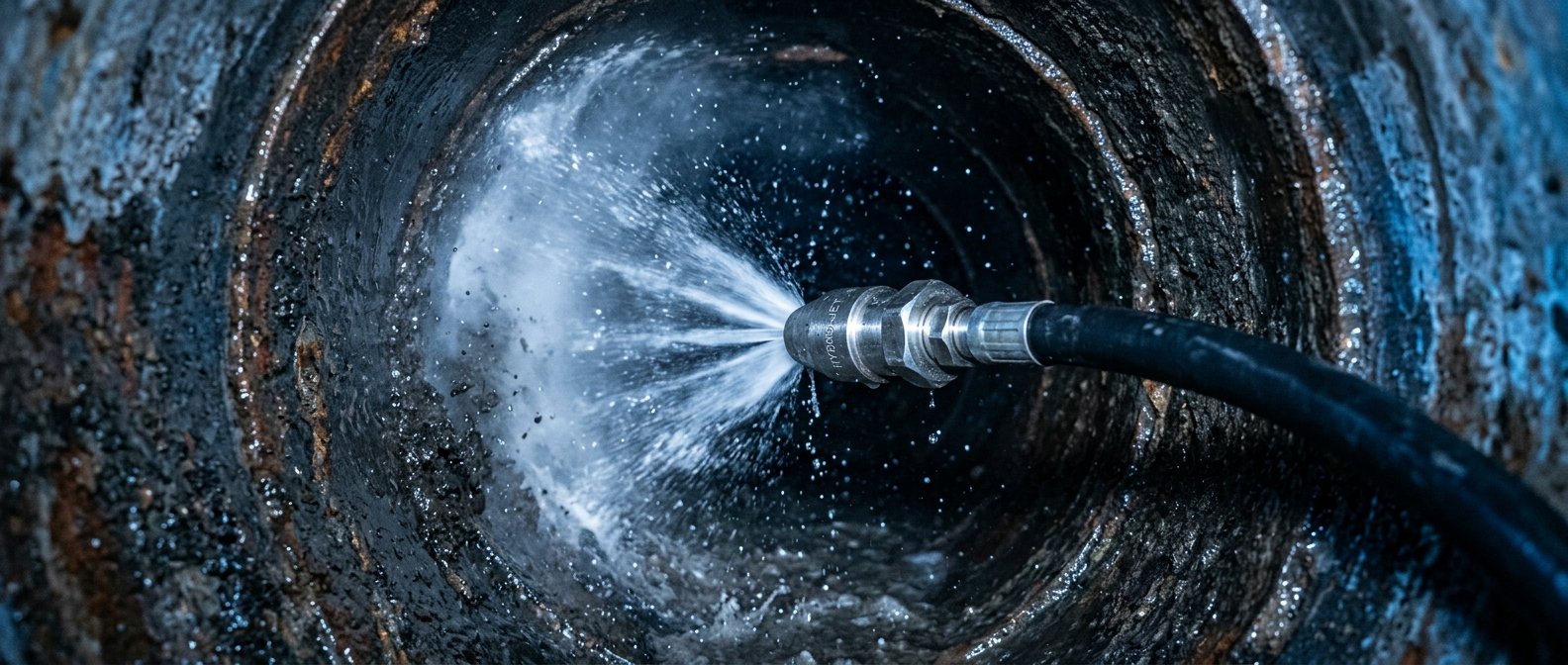
Which cleaning method fits?
For a clog close to a fixture, a hand snake often does the job. For grease buildup, scale or fine roots along a longer line, hydro jetting uses high pressure water to clean the pipe walls, which can leave the line flowing better than a snake alone. The right choice depends on the material and condition of the pipe, and a camera helps decide. In a condo, the method may also depend on where access points are located. Our Montreal guide goes into a bit more detail on snaking and hydro jetting.
Habits that help
- Wipe pans with a paper towel before washing, and never pour cooking fat down the sink.
- Use strainers in the kitchen sink, shower and tub.
- Flush only toilet paper. Wipes, even those labelled flushable, belong in the garbage.
- Run hot water for a moment after using the kitchen sink.
- In a condo, tell the property manager early if more than one unit seems affected.
- Do not ignore a drain that keeps clogging. Recurring clogs mean something deeper is going on.
When to call a drain cleaning company in Brossard
Call when water backs up, when several fixtures slow down at the same time, when a clog returns within days or when a floor drain smells or gurgles. Super Drain Experts inc. serves Brossard and the South Shore, as well as Montreal, Laval and the North Shore, day and night, for houses, condos and apartments. Browse our services, or phone 514-262-3337. You can also use the form on this page or our contact page to ask for a free quote.
Frequently asked questions
Who is responsible for a clogged drain in a Brossard condo?
It depends on where the blockage sits. A clog in the branch line inside your unit is usually the owner's matter, while a shared stack or main line is typically handled through the syndicate. Check your declaration of co-ownership and tell the property manager if several units are affected.
How can I tell if the clog is in my unit or in the shared stack?
Look at the pattern. One slow fixture usually points to your own branch. Several slow fixtures, or neighbours with the same problem, suggest the shared stack or main line.
Should I use chemical cleaner on a slow drain?
It is better to avoid it, especially on a drain that is backing up. Chemicals rarely clear a deep blockage and can leave a harsh liquid in the pipe. A snake, hydro jetting or a camera inspection is a safer next step.